Category Archives: India

Going Local: An Insider’s Guide to Pakistan and India’s Film Industry

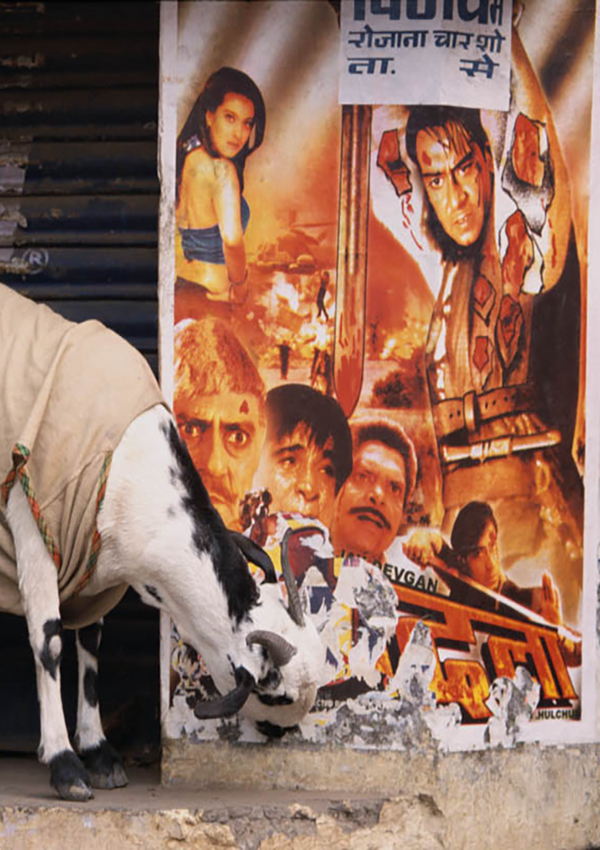
The Woods, they are a confusing place. Bollywood is just a player in India’s massive cinema scene. Get the low down on Bollywood, Mollywood, Tollywood, and yes, even Kollywood. I am also including Lollywood (you heard me right) even though it is based in Pakistan, because there is nothing that can beat the old school Punjabi classics coming out of there.

LOLLYWOOD
Lollywood is arguably the most underrated film industry in this part of the world. There has never been the sleekness, sex-appeal, string of  “super-hits,” or the budget that Bollywood has had over the decades. But then again, it wasn’t funded by the Indian mafia either. During the 1960s, Indian entertainment in almost all forms were heavily censored, and in many cases, banned. This inevitably gave rise to blackmarket dvds, and radio programs playing bollywood dance numbers based out of Sri Lanka. These days, most Pakistanis (and Indians), as well as Desis the world over, get their hit of movies from Bollywood. But in its heyday, Lollywood made a string of the most awesome Punjabi films. Now Punjabi films are relegated to Sikhs from outside India, so you have a handful of Punjabi films with the same weepy storyline and the hero is a Punjabi singer with zero acting ability who is funding the production.

CHECK OUT:
Maula Jatt, which launched the careers of Sultan Rahi (the hero) and Mustafa Qureshi who plays the villain, Noori Natt. The storyline is simple. Maula Jatt is the hero. Noori Natt is the villain. He steals his woman. Maula Jatt kicks ass while wearing a loongi, carrying a gandasa, and gets his woman back with a lot of dishoon-dishoon, and some of the most awesome zingers in the world. There is also a lot of mustache tweaking. Here is the best fight scene you have ever seen:

Share

Video: The Karni Mata “Rat” Temple in Deshnoke, Rajasthan

Check out the video of our visit to the Karni Mata “Rat” Temple, home to 20,000 rats in Deshnoke, near Bikaner, Rajasthan in India. The rats are believed to be incarnations of tribesmen of the aesthetic Karni Mata (an incarnation of the Goddess Durga). People come to pay their respects from all over the world. We were one of them!

Share

Musings: Independent Travel . . . With Children?

I finally got my computer in good enough shape to edit this video and the last bit made me smile. Watch it and you’ll see what I mean. We were staying at this coffee plantation in Madikeri, Karnataka, and took a side trip to see the Dubare Elephant Camp. On the ride there, we met Paul and Kirsten Thompson, a couple from New Zealand, who we instantly took a liking to because we thought they were absolutely bonkers in the best way possible.

They were on a 10 week holiday in India with not one kid, not two, but three. And the names of the children were just brilliant: Merlin, Felix, and Rumi. Merlin, the youngest, was 2, and looked like I’d imagine Merlin the magician to look like at that age, complete with long, wavy blonde hair. Rumi, the eldest was 7, with Felix smack in the middle at about 4! And I remember thinking that this is really encouraging. The spirit of independent travel need not be crushed just because you have children.

Rumi and Navdeep

Rumi and Navdeep

I got on famously with the eldest kid, Rumi, who we got on camera hosting this video. He did a bang up job too in his cape! What I was really impressed by was how adaptable these kids were, and as cliched as it sounds, how worldly and intelligent Rumi and Felix were. Felix had this really funny way of asking questions. His mum and dad had told him to stop interrupting people and to say “Excuse me,” before speaking. So, armed with “excuse me,” he would interrupt every conversation by repeatedly saying, “Excuse me, ” followed by, “I have a question.” Some of the questions were really interesting, some were entertaining, but most went absolutely nowhere. Rumi was much more reserved and poignant in his observations, and asked really incisive questions. Merlin enjoyed just traipsing about in shoes much too big for him.

Sona was particularly fascinated with what the kids ate and we were both duly impressed that they ate plenty of Indian food, from dosas to dhokla, but stayed away from the usuals: street food using potentially unsanitary water. Although eating unsanitary street food is the most delicious part of India (or any country really), I can’t imagine traveling for a limited amount of time, with three kids who have dodgy tummies or worse! The reason Sona found it so interesting is a) unbeknownst to me, she was thinking about this baby business in “at least a year.” Notice my nervous laughter at the end of the video and the abrupt blank look on my face when Paul mentioned the word, “quantity.” That expression should be right next to a visual dictionary definition for the word “gobsmacked.” And b) Sona’s travels to India never involved street food. This rule about no street food, inflicted by her parents, extended from infancy all the way till past her twenties! Sona’s mother used to pack food like Macaroni and Cheese and cereal for Sona’s brother because he refused to eat Indian food in India. He was nine years old!

I, on the other hand, didn’t know any better. I didn’t know there was another option. I was 2 weeks old when we left England to go to Tanzania, and from there Nigeria, the U.A.E., and of course America. Having been raised in several different countries from such a young age, I thrive in being put into a situation I might not be familliar with. This made traveling in China and communicating with people for things like toilet paper, or cold water using dodgy sign language, not such a big deal. I am very adapatable to different food and customs. My sister, who was much more cognizant of how different the places were from “home,” likes to use the word “adventurous.”

Before travelling with Sona, it was something I’d taken for granted. I don’t get cravings for comfort food and I don’t get nostalgic for that sense of home.But these days, a sense of home is much easier to come by than it was even a few years ago. You’re constantly connected to some version of the familliar. There are bars in Tibet, discos in Nepal, Pizza Hut in China, upscale dining in India, and internet cafes (not to mention wireless cards) all over the world.

Sona and Navdeep Have a Baby!

Sona and Navdeep Have a Baby!

As a father to a one-year-old, I often think of Paul and Kirsten, and about our next big adventure. Our six month backpacking adventure was a lot of fun, but it was much different to my solo travels. My solo travels were a lot more dangerous, although we did take a really sketchy 15 hour local bus ride in the middle of the night to Srinagar. Travelling with Sona, constantly being together day in and day out, really deepened our understanding of India, of each other, and much later we realized, of ourselves.

I always thought of getting married and having kids as an end to independent travel, exchanging that backpack for a nice carry-on, and being one of those geeky tourists that think they’ve travelled to a country because they booked a ten day tour to the “best” sites. But getting married certainly didn’t have that effect, and thanks to Paul and Kirsten and their trio of swashbucklers, neither will having kids. So, as to the question of quantity? Three sounds like a nice number.

Share

Musings: The Six Oddest Places We Slept in India

The Golden Temple, Amritsar

Imagine waking up to this view everyday!

Traveling in India for six months, we had our fair share of odd experiences — but the most interesting seemed to be when it was time to rest our weary heads. From bumpy buses and crowded trains to a thatched hut on the beach, here’s a round-up of the six oddest places we slept in India.

The Beach Hut In Goa
Honestly, it was as awesome as it sounds. A thatched-roof hut with poles sunk into the warm beach sand. It contained just a bed and a chair and a functioning, American-style bathroom (very necessary). As soon as we stepped outside, we could see, smell, and even taste the ocean! It was perfect for lounging, swimming or having a casual, Goan Feni-soaked afternoon. Dinnertime was a candlelit meal of fresh seafood and locally grown veggies, a picnic right there on the sand. It was the first time we discovered, even dinner could be haggled for! (And breakfast was chocolate corn flakes for Navdeep. But only once. Turns out, it was regular old corn flakes with chocolate syrup on them! Ew!) Can’t wait to come back.

The Tree House In Periyar
We may have missed the elephants and tigers and bears on our safari in Periyar, but the three nights we spent camping out in the treehouse at Carmelia Haven made the trek worth it. It was amazing — an actual tiny little one-room house in a tree, with little windows overlooking the garden, and a giant bed taking up most of the space. Sure, we didn’t have our own bathroom and it wasn’t nestled in the middle of the forest, as some within the grounds of the conservation area were, but it was a unique and amazing experience just the same.

The Barracks at the Golden Temple
We have family in Amritsar, so we didn’t really need other accommodations there. But once we learned that you could actually stay at the Golden Temple, we had to experience it for ourselves. So, we showed up in our Indian attire at the reservations booth and Navdeep asked for a room in Punjabi. We were given one, sure, but it was not quite what I was expecting. It was dormitory style without lockers, and squat toilets. Shared squat toilets. I saw a rat scurrying about and looked pleadingly at Navdeep. Did I mention that we were there for my birthday? Navdeep took pity on me (not that he had much choice), and we gave it another go. This time, we dressed as backpackers, him in jeans and T-shirt, me in a long flowy skirt and we both wore bandanas. We were immediately given another room, this time a large, airy suite with a private bath and balcony. All for 50 rupees a night! And right at the foot of the Golden Temple. It was an absolutely magical experience.

The Beach-Front Cottage In Puri
We were only in Puri for one day — we stayed there overnight when was stopped to see the amazing Sun Temple in Konark Bhubaneshwar, which is intricately carved with poses straight out of the Kama Sutra. Once we arrived at the lovely, airy, immaculately-kept Z hotel, a old, rambling palace, we wished we’d given ourselves more time in the area. We wandered the storied beach at the Bay of Bengal before settling into our, which was huge and breezy, with a four-poster bed and a view of the sea. One point to note, though: this is a tourist hotel, which means when we called to reserve a room and spoke in Hindi, there was no availability. However, when I called five minutes later and spoke in English, with a clear American accent, suddenly a room was available. Go figure.

The Bumpy, Stinky, Squishy Bus to Jamu-Kashmir
If you think sleeping on a plane is rough, you’ve clearly never tried 0vernighting it on a non-deluxe bus in India. We spent 15 hours stuffed into a 15-inch two-seater on a shock absorber-less clunker that sputtered more than 1000 miles from Pathankot into Kashmir. The bus — on which I was the only female — made an unexplained late-night stop for several hours in the middle of a bridge, with water on either side of us. And there was no bathroom, so, I awoke from one fitless stretch of sleep to several men, lined up in a row outside my window, peeing on the bus. That’s right, on the bus. Fun times. Later, of course, we learned that the equivalent flight would have cost a mere $50 and run 90-minutes. So obviously, we winged it back to New Delhi.

The Houseboat in Kashmir
The houseboat experience in Srinagar, Kashmir, was amazing — though very different from the one we had in Kerala. This was more like a literal home on a boat, one that was docked at one edge of Dal Lake. It had a real bedroom, dining room (complete with china cabinet), terrace, the works. We stayed for four nights and enjoyed traditional Kashmiri curries and biryanis, lounged on the terrace as salesmen on shikaras floated by with their wares, and watched locals row by in their shikaras, going about their business, selling veggies, shawls, or heading off to school.

Share
Happy New Year From Rani, the Camel!

Photo of the Week: Rani the Camel from Rajasthan Wishing You a Happy New Year!

Happy New Year From Rani, the Camel!

Happy New Year From Rani, the Camel!

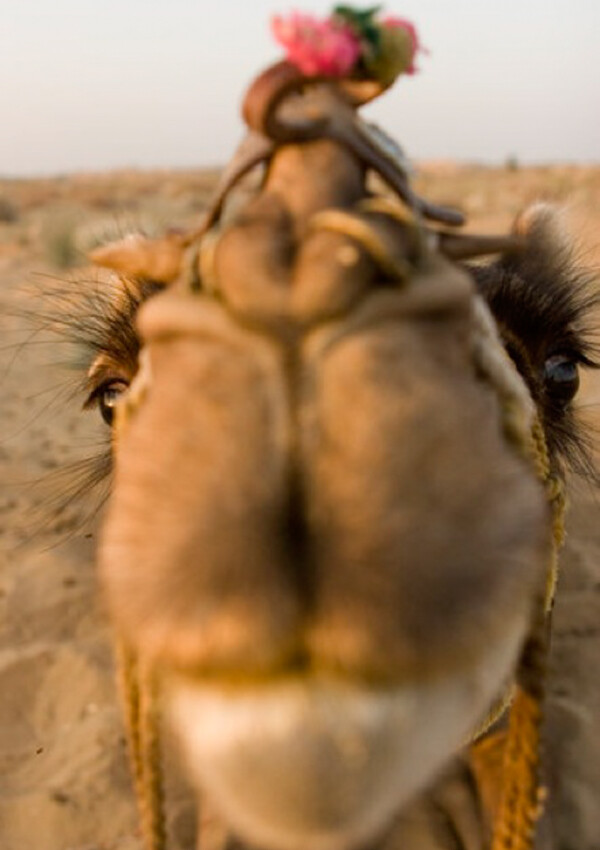
What better way to ring in the New Year than with a kiss from my favourite camel: Rani from Rajasthan!

Share
Aloo Paratha

Eat this Page: Aloo Paratha (whole wheat Indian flatbread)

Aloo ParathaParathas are whole-wheat Indian flatbread that can be as healthy as you want them to be. You ca eat them plain, or stuffed, for breakfast or lunch. This recipe uses our favorite filling – aloo (potato) – with a much healthier adaptation from expert paratha maker, Binder Bhua, Navdeep’s aunt in Punjab. She is very Punjabi, so doesn’t understand the concept of “no ghee” and finds the idea of a dry parantha unfathomable, hence the glistening parantha in the photo above.

PREP                         COOK                 SERVES

30 minutes                  20 minutes              6 parathas

POTATO STUFFING
2-3 medium potatoes (1 lb or so)
1 inch piece of ginger, peeled and diced
1 or 2 cloves of smashed garlic, if desired
1 teaspoon ajwain (caroway seeds)
½ to 1 teaspoon lal mirch (cayenne powder)
½ teaspoon salt
1 or more green chillies, to taste
½ teaspoon cumin seeds (jeera), ground
½ teaspoon dhania (cilantro/coriander), ground
½ teaspoon anar dana, ground

DOUGH
4 cups of wheat flour, sifted
additional flour for dusting
water, as needed, to knead flour into a firm, but pliable dough
rolling pin
flat floured surface

EQUIPMENT
tava or griddle pan
ghee (clarified butter) for frying and topping; for a healthier option, use olive oil. You can also use butter.
Thick Indian style plain yogurt for dipping
aam ka achar (mango pickle)

Stuffing the ParathaINSTRUCTIONS
1.  In a large bowl, mix sifted flour with water, adding a few drops at a time and kneading the mixture until a firm but pliable dough forms. When you have a large, smooth round, cover bowl with plastic and refrigerate for at least half an hour. This process can be done ahead of time as long as the dough is covered and refrigerated.

2.  Peel and boil one pound of potatoes (2-3 medium sized) until soft but not mushy. Let cool.

3.  Finely dice onion, chilies, and ginger. Add garlic if desired.

4.  In a small pan, dry roast jeera (cumin seeds) until it turns black. Grind jeera, anar dana and dhania (cilantro/coriander) into a fine powder.

5. In a medium-sized bowl, mix pototoes, onions, chilies, ginger, garlic, salt, lal mirch (cayenne), jeera (cumin), anar dana, and dhania (cilantro/coriander) until well-blended and of smooth consistency.

6. Remove dough from fridge. Form pedas, which are small, two-inch rounds. Lightly flour each peda.

7. Take a peda and flatten edges with the palm of your hand, until a three-inch disc is formed. Flour both sides of disc, then lay on flat, floured surface. Roll out peda into a four-inch round disc.

8. Add two heaping teaspoons of potato stuffing to the center of the disc. Fold in edges to close around potato mixture, ensuring there are no leaks.

9. Using the rolling pin, carefully roll the stuffed peda out into a six inch round, dusting with flour on both sides to prevent sticking.

10. Heat tava or griddle pan to medium heat. Carefully flipped rolled six-inch parantha on to the hot pan. Cook for one minute, then flip and cook for one minute on the other side. Add a dollop of ghee or butter to the top of paranta, spreading over the surface of the bread. Flip again. Enjoy the sizzle as it browns. Add ghee or butter to the other side, spreading over surface. Flip and brown this side. When both sides are crispy and golden with brown spots, your parantha is ready.

Repeat process for each peda until you a have a hearty stack.

Serve hot off the tava with dahi (thick Indian yogurt) and aam ka achar (mango pickle) for dipping and wash it all down with Sona’s special adraki chai.

Share
Eat This Page: Spicy Kaju

Eat This Page: Spicy Kickin’ Kaju (cashews)

Eat This Page: Spicy Kaju

Sona’s mum makes these spicy kaju (cashews) as an occasional indulgence—but they’re perfect on a dreary day with chai or a mellow whisky (depending on your mood). She fries the cashews till they’re golden brown, then seasons them up with a red-hot masala. This version is pretty spicy, so feel free to adjust the mix for less adventurous palates (zzzzz).

PREP                         COOK                 SERVES

2 minutes                  7 minutes              6 for snacking

INGREDIENTS
1 lb raw white cashews—not roasted and not salted
2 to 3 cups oil for deep frying (canola works well)

MASALA:
½ teaspoon salt
¼ teaspoon kala namak
2 teaspoons jeera (cumin seeds), dry roasted and ground into powder
2 pinches hing (Asafetida)
2 teaspoons chaat masala
1 teaspoon lal mirch

INSTRUCTIONS

1.  In a small pan, dry roast jeera until it turns black. Grind into a fine powder. In a medium-sized bowl, mix salt, kala namak, jeera, hing, chaat masala and lal mirch.

2. Heat oil on medium-heat in a deep frying pan or walk. Oil should be hot (around 400 degrees Fahrenheit) but not smoky.

3. Drop in one cashew to test oil. When hot, add cashews and fry two to four minutes, until the pale cashews go a light golden brown. Drain cashews on a few layers of paper towels, then toss while hot with the masala mixture, coating thoroughly. Add additional salt and lal mirch to taste.

Serve warm with Sona’s special adraki chai, or if you’re a real man, whiskey.

Share
Eat This Page: Sona's Adraki Chai Recipe

Eat This Page: Sona’s Special Adraki Chai Recipe

Eat This Page: Sona's Adraki Chai Recipe

Everyone’s chai recipe is different—but I like to think mine is special. So here, without further ado, is my super-secret, much-coveted recipe. My Kadak Adraki Chai combines the kick of ginger with the mellow flavors of fennel and cardamom. And I like my tea strong (or kadak in Hindi)—so add more milk and less tea for a milder chai.

PREP                         COOK                 SERVES
2 minutes                  5 minutes           Makes two big mugs

INGREDIENTS
1 heaping teaspoon loose black Darjeeling tea
2 tea bags (Sona recommends Tetley)
1 two-inch piece fresh ginger, peeled and smashed
½ teaspoon fresh cardamom seeds, gently smashed
1 teaspoon fennel seeds, lighted smashed
2 cups water
1 cup milk, at least 1 percent (for a creamy texture)

Optional: Cinnamon or cloves add a nice touch

INSTRUCTIONS
1.  Peel and smash ginger, and light bruise fennel and cardamom seeds to release oils and bring out flavor.

2.  Add ginger, fennel, and cardamom to saucepan with two cups water, loose black tea and tea bags. Bring to a rapid boil on medium-high heat.
While boiling, add one cup cold milk. Bring the liquid to second boil.

3.  Strain the now-golden liquid into two large mugs, carefully keeping loose tea and other ingredients out of the cups.

Enjoy hot, preferably with pakoras or cookies.

Share
The Seventeen Hour Plane Drain

India Travelogue: The Seventeen Hour Plane Drain

The Seventeen Hour Plane DrainWe woke up at three a.m. and were out of the house by four, stuffing samosas and sipping cha as we headed to the airport. By seven a.m., seated in the back near the toilets, we were both revved up for our trip, watching intently as the plane took to the skies. By 7:30, we were both fast asleep. Navdeep doesn’t even remember waking up to consume half of his scrambled egg pita pocket thingie.

We woke up five hours later to catch the landing at Newark, where we were greeted by my parents for four hours of family, fun, food, and tips galore (check out Navdeep’s post, “the Four Hour Layover Fiesta”). By 8:30 p.m. EST, we were once again safely ensconced in our seats, this time for the long haul, almost 13 hours from Newark, New Jersey to New Delhi, India. I anxiously watched as the plane boarded, hoping beyond hope that the seat on the other side of Navdeep would remain empty, though it wasn’t supposed to be (I checked on Continental.com a few hours before we took off). And then, magically, it did. So we stretched out as comfy as we could in the about six cubic feet of space alloted to us, and eagerly awaited dinner. Yeah, yeah, yeah, I know the rep plane food has. Still, we were expecting some rendition of Indian food. But the non-veg entree turned out to be chicken cacciotore (or however you spell it), that Italian-esque amalgumut of chicken, tomatoes and peppers, in this case doused heavily with cheese. Still, it was accompanied by dahi (desi yogurt) and achar. Chicken cacciatore is apparently known dramatically as Shikari Murg in Hindi.

After dinner, Navdeep and I each squished into one-and-a-half seats to catch some zzzzs. It was painful at best, an arm-rest in the neck, Navdeep’s foot in my stomach. After a four-hour nap, we awoke to see what was playing on our individualized six-inch TV screens. Navdeep watched the taut crime thriller Shootout at Lokhandwala, while I watched some inane Akshay Kumar romantic comedy I still don’t know the name of.

Another few more four-hour naps and we were landing at Indira Gandhi International Airport in New Delhi. And after sitting on our asses for 17 hours, boy were we exhausted.

Share
Navdeep Singh Dhillon

Our Gear: India 2007

HARDCORE BACKPACKS
I’m carrying a One Polar 80 backpack I bought in China for $10. It’s been loyal to me so I’ll be loyal to it. Until it falls apart. Then I’ll get a new one. We got a great deal from Rei Outlet store on a pretty robust Victorinox backpack with removable daypack made by Swiss Army. Hopefully Sona doesn’t topple over with this one on!

Hardcore BackpacksIt seemed like a good idea at the time. We ordered the Kelty Corona Double Capacity Sleeping Bag to keep us clean and warm in dodgy hotel rooms. As you can see, if we brought this along, there’d be nothing else for us to carry. We’re still keeping it though. We’ll bring it along next time we go on a camping trip, even if it is in the backgarden! We randomly stopped at a Big 5 in Fresno after doing a grocery run at Foodmaxx and found our replacement sleeping bags. While not as spacious and cushiony as our Kelty, these are also not as humongous. Two of these fleece Texsport sleeping bags can be zipped together and voila: double sleeping bag.

Camera GearCANON 20D
I’ve had my Canon 20D for a couple years now and am thrilled with it. After our India trip, I upgraded to the full-frame Canon 5D which I am also thrilled with. As a professional wedding photographer (www.nsdphotography.com) the lenses I own are a reflection of my shooting style. I don’t do heavy lenses because that means I have to lug those mofos around. I have two flashes –the Canon 580EX and the 420EX along with the following lenses:
10-22 f/4 – Wide Angle (only works with the 20D)
50/f4 – Portrait Lens
35-135 f/4 Normal Lens
70-200 f/4 Telephoto

CANON ELPH
Sona’s nerdo brother and sister, both have the Canon ELPH. And now we do too! It’s reliable, looks sleek and takes crisp images. We have the 7.1 megapixel version and a 2GB memory card. The main draw is we can take self-portraits of the two of us without risking my fancy pants camera crashing to the ground.

SONY HDV-A1U KIT
While on the road, we didn’t want to draw attention to ourselves with a bulky video camera but we did want the image quality that a bulky video camera brings. So after lots and lots of research and deliberation, we decided to go with the super-tiny Sony HDV-A1U kit from B&H online (save the sales tax by shipping it outside of NYC). It’s perfect because its small size lets us pretend to be tourists or professionals when we feel like it. It has the gumption to mimic film by shooting HDV in 24p. The best bit is that you don’t need really expensive or hard to find tapes to shoot it on. It uses standard MiniDV! We’re using several standard ones and two Sony MiniDV tapes “designed for HDV.” We won’t get into everything brilliant about our kit here, but the lavalier mic is pretty spiffy and will come in handy for any interviews we wind up doing.

OLYMPUS DS-2300 DIGITAL VOICE RECORDER
Even though this stupidass device records in DSS format, it’s still a really handy gadget. It fits into Sona’s pocket and records pretty clearly. We use this for on the fly interviews when we don’t feel like hauling our lavalier mic with us.

MANFROTTO
For the most part, I like to run around with a camera in my hands, but every so often I’ll need a tripod for steady shots in low light or when I do family and bridal portraits. Manfrotto is the shiznit and it is for this reason we have so many of their products. The 3021 tripod and ball head are fantastic for steady shots. Sona bought a video head and monopod to attach her video-camera to so our footage doesn’t look like a crisp and professional shaky home video!

STORAGE
Storage
COMPUTER GEAR
We have two camera specific backpacks. Sona has the LowePro CompuTrekker and I have the Tamrac Cyberpack 8. Both of them can fit
our laptops too which works out well. We had to upgrade to a bigger sized bag to handle Navdeep’s super-sized 17-inch Dell, but Sona’s petite 12-inch PowerBook is very portable. Both computers are equipped with photo and video editing software, along with Final Draft in case Sona gets the urge to write. We also lug along a 500 GB hard drive for photo and video storage.

SECURITY
MONEYBELT/PASSPORT HOLDER
This is what we’re using to carry our valuables. No fannypacks or expensive leather made products for us. The orange one I bought in Nepal and the yellow one from Tibet.

MAGNA CART
Instead of paying $200 some bucks for a rolling backpack, we decided to just get a set of wheels. This can allegedly hold 150 lbs so this should do the trick to carry our camera bags at least.

LOCKS
We did look at one of those mesh net things offered by PacSafe but while it does look intimidating to the average crook, it also looks very enticing. A pair of pliers or a strong set of teeth and someone has an all access pass to our goods. Instead, we opted for a more subtle approach and are using a simple lock that came with the backpack.

INSURANCE
Initially we wanted to just add our equipment to my parents’ existing homeowners insurance but that didn’t give us a very secure feeling. They would cover it, but there were a lot of limitations. We felt like if anything did go wrong, there would be that fine print telling us that we weren’t covered. After scouring the internet, Sona and I finally decided on Safeware to insure our laptops and camera equipment. They cover everything from power surges to plain ole clumsiness, and you can decide if you want short term insurance or long term. We opted to get it for the year.

SOFTWARE
After briefly considering using template based content management systems like WordPress and Joomla, we decided to make our lives a lot more complicated by creating Ishqinabackpack.com from scratch, using Dreamweaver.

Related Posts Plugin for WordPress, Blogger...
Share