Archives for 2007
Lazy Spirituality: Gurdwaras, Gompas, and Temples . . . Oh My!
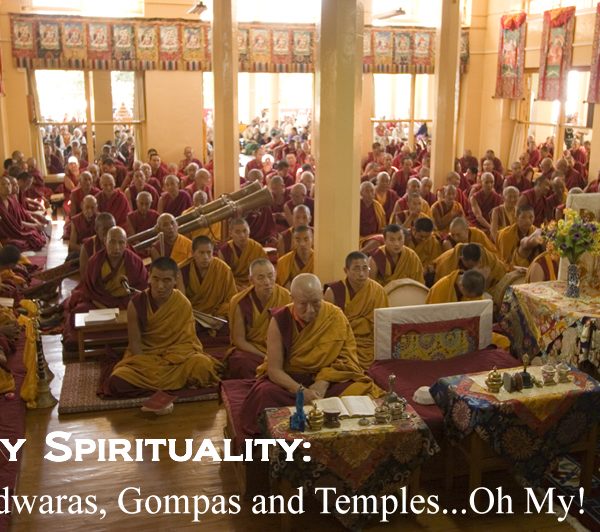
For someone who says she isn’t religious, I’ve sure visited a lot of temples, gurdwaras and even Buddhist gompas in the past month. And despite my frequent protest against the cult of religion (don’t get me started!), it’s been a strangely moving experience. Maybe India’s spirituality is rubbing off on me. Maybe I fancy myself writing a profound memoir of faith a la Elizabeth Gilbert’s Eat, Pray, Love (which I just finished reading and highly recommend). Or maybe I’m just at that place in my life where I feel the desire to reach out–both in need and in thanks. All I know is this: on this trip, there is definitely something heavy on my mind for which I am seeking guidance, solace and comfort, both for myself and for those I love. Perhaps it’s this turning point I’m facing that is causing this reaction.
When Navdeep and I first met, he’d talk often about the Sikh spirituality, what it meant to him growing up, what it means to him now. To him, Sikhism is almost more of a cultural calling than a religion. It has such a spirited and sacrificial history, you can’t help but be moved by it, especially while standing in one of the many monumental gurudwaras, like the one in Tarn Taran or especially the Golden Temple.
But growing up for me, it was different. We were raised what I call “supposedly Hindu.” Along with the all-American Christmas trees and Easter egg hunts, we tied rakhis and left all the lights on during Diwali, we occasionally dressed up and went to the local temple, we had Sunday morning halwa as prasad. But when I asked questions about why Ram did this (especially regarding the Sita situation) or Shiva did that, I rarely got back more than a shrug. We went through the motions of religion without really feeling connected to its meaning or power. I was bored to tears in the manditory survey of Eastern religions class at Rutgers, which was so cut and dry, completely just the facts ma’am. And that, along with all the news about Jihad this or genocide that, left me so utterly disillusioned with the concept of religion that I became dismissive about it. Religion is a crutch for the weak and an excuse for the angry to pick up arms and kill others. I didn’t need any of that.
So why have Navdeep and I been popping our heads into endless temples, gurudwaras and other places of worship? Why are we here in McLeod Ganj, the spiritual and physical home of modern Buddhism? Why did we spend the day with a Tibetan monk? What is it we’re looking for anyway?
When Navdeep and I first met, he’d talk often about the Sikh spirituality, what it meant to him growing up, what it means to him now. To him, Sikhism is almost more of a cultural calling than a religion. It has such a spirited and sacrificial history, you can’t help but be moved by it, especially while standing in one of the many monumental gurudwaras, like the one in Tarn Taran or especially the Golden Temple.
Bus-Ted: Ruminating on India’s Local and “Deluxe” Buses
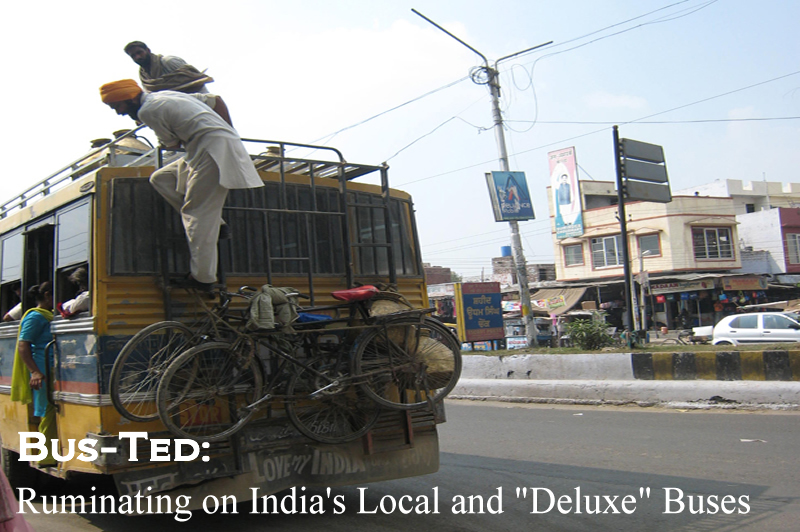
When Navdeep repeatedly warned me about the uber-bumpy buses we’d be taking on this trip, I didn’t really take him seriously. After all, I was used to dealing with the horrors of New Jersey Transit and Greyhound. Not to mention the fact that I once took one of those video-buses that play old, scratchy Bollywood flicks at eardrum-blasting levels the whole ride. It didn’t seem so bad. I was shoved out of my false sense of security by our first “Semi-Deluxe” bus ride, from Chandigarh to Malout.
Accidentally Finding Spirituality in India: The Golden Temple and Beyond
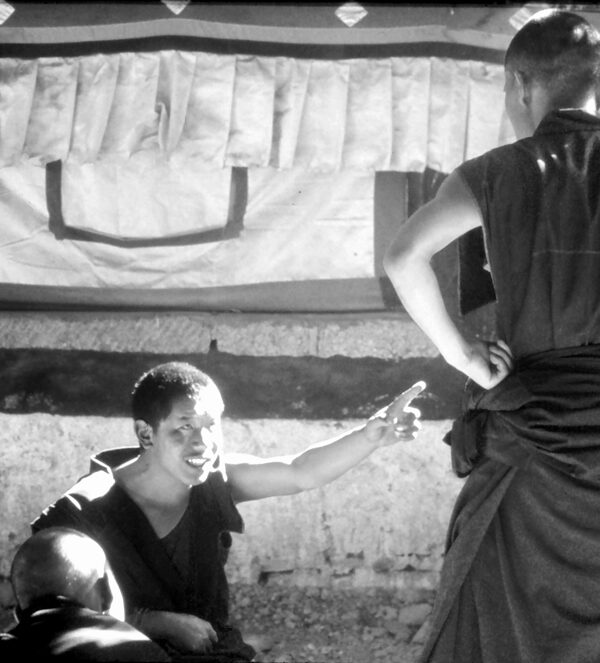
It’s a very strange feeling being back in India as a traveler again, but this time as a couple. It’s difficult not to think about our own spirituality when religion is everywhere, from impromptu Sufi music being sung in the park, or masjids, gompas, mandirs, and gurdwaras rooted in history that resonate deeply.
Oh Ma! My Knee! : Sona and Navdeep Climb to Vaishno Devi
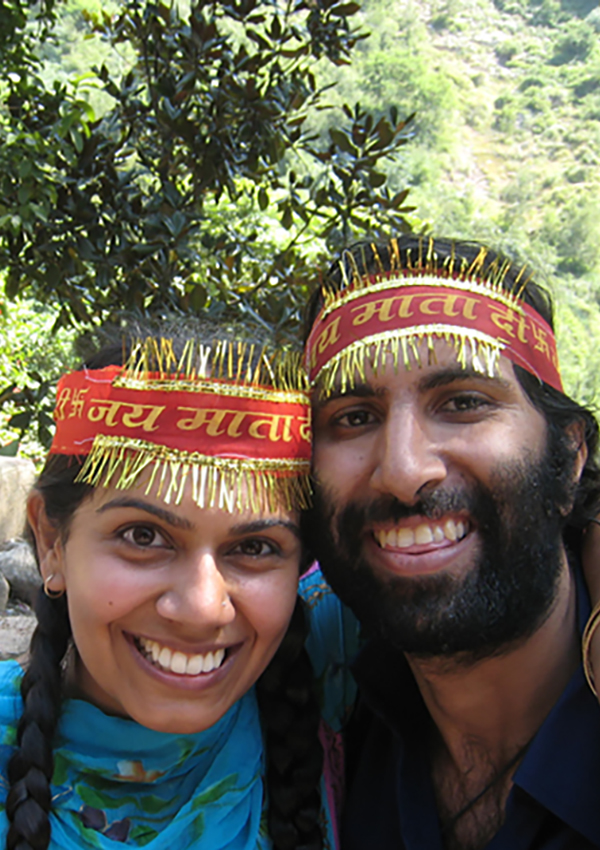
I don’t really know when or how it was decided that Navdeep and I were going to make the pilgrimage to Vaishno Devi. Neither of us are terribly religious, he had never heard of it, and it was an 18-mile hike up and back. Not something to be taken on lightly.
Perhaps it was my mom who planted the thought. She seems like a likely culprit. She’s been a few times herself, and seriously believes prayers delivered at Vaishno Devi will be considered and answered. This concept of manate (muhnatay) drives millions to the site of the Mata Ki Darshan every year. Despite the treacherous hike, despite the heat, despite the fact that the actual darshan is maybe three seconds at best, a blur of armed guards, marble and gold.
We’ve all had a tough year though, and I know my mom saw our trip as an opportunity to sprinke a little hope, at the very least. So Navdeep and I made the trek carrying the prayers of our loved ones. Not that we didn’t have a good time doing it. We looked at the hike as a bonding adventure, and we took it seriously. Though we were amongst the few pilgrims who could afford a 250-rupee pony ride or even a 3000-rupee one-way helicopter ride to the top, we wanted to make the trip ourselves, along with the thousands of other Indians from all over the country (and the planet) who chose that day to make the climb.
But it wasn’t easy. My mom promised us that the hike would be two hours up and two hours down. Ha! Maybe if you take a super-speedy pony. I’m no avid hiker, but I can handle a good walk. So Navdeep and I set out at 11 a.m. at a leisurely pace, stopping for ice cream, cold coffee and juice, posing for pictures, admiring the hilly countryside. By two p.m., we had barely hit the half-way mark. By the time we reached the actual site of the shrine at six p.m., it was sunset and we were exhausted.
Eat This Page: Tibetan Momos in Mcleod Ganj, Dharmsala
McLeod Ganj, known as Little Lhasa or Dhasa by Tibetans, has one of the largest population of Tibetan refugees, and is the headquarters of the Tibetan government in exile. So we thought a lovely way to spend our morning and getting to understand the culture of Tibetans in Exile would be through the food.
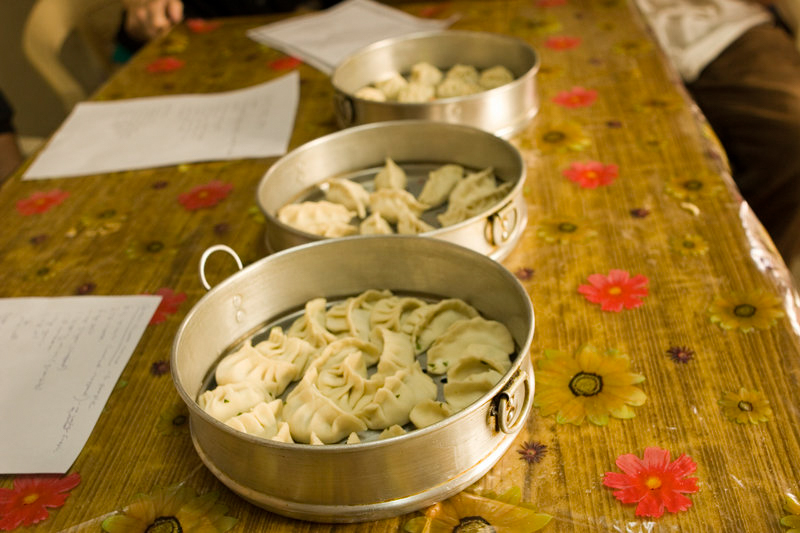
We went down a little side street and found Lhamo’s Kitchen run by (who else) Lhamo, a very laid back and funny cooking maestro, who wears an apron over a wife-beater. You can’t get more authentic than that. Actually you can: his cooking school is in his living room. An interesting thing we learned about momos – stuffed dumplings – is that in Tibetan, “Mo” means ”tasty.” So, in effect, momo means “tasty tasty.” Very fitting if you ask us!
We learned to make traditional Tibetan momos with veggie fillings, but the momos can be stuffed with anything you like. To prove this point, Lhamo told us we could even put chocolate in it! Traditional fillings are mutton, potatoes, and Tibetan veggies. The fillings we used in our course were vegetable, cheese, and spinach.
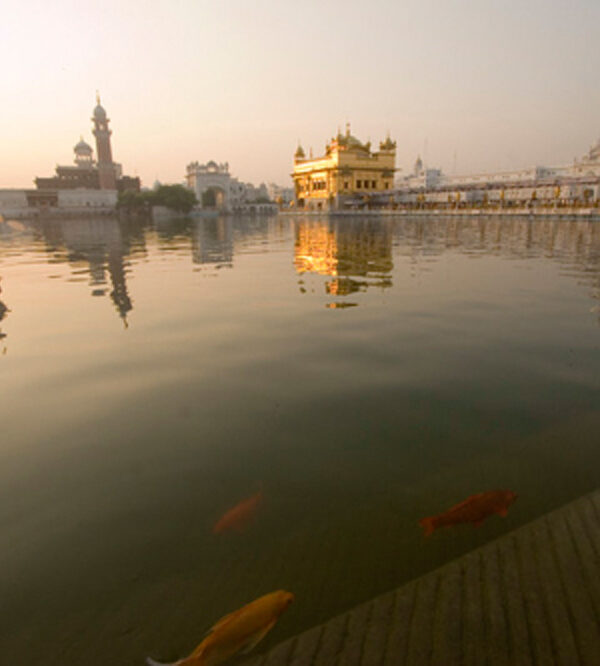
Photo Friday: Massive, Orange Fish at the Golden Temple in Amritsar!
We spent Sona’s birthday at the Golden Temple in Amritsar, where we caught the sunrise, ate some delicious food at the free community kitchen, and watched these huge, orange fish swim through the sarovar in a body of water surrounding the Golden Temple. Absolutely gorgeous. Don’t worry, there was also cake.
Oh Ghee, If You Were Only Calorie Free!
Between the two of us, Navdeep and I have probably already gained 15 lbs. in two weeks. And we haven’t been hoarding junky street food, though we still have big plans to. It’s just that we’ve spent the last two weeks in the heart of Punjab, devouring hearty home cooking. Paranthas, samosas, pakore, daal makhani, paneer in all its wonderous forms, deep-fried buttery omelets. All very tasty. But all very heavy. It wouldn’t be so bad except that the etiquette here dictates that you can’t really say no to what is being offered, especially if you are visiting someone’s home for the first time.
And the daily menu always includes morning cha, inevitably with cookies or other snacks, followed by breakfast, then a mid-morning snack, then lunch, then afternoon cha with samosas or pakoras, then an evening snack, and finally a late dinner. Add to that the occasional 140-calorie Limca or ice cream indulgence, and you’re likely double the already weighty 2000-calorie per day FDA average that fat Americans consume.
Given our comprehensive daily menu, we haven’t really had the urge to splurge on paneer pakore or gol guppas on our own. In fact, we’ve started strategizing on how to cut down on our cholestrol-laden consumption. The problem is that every breakfast item on the Indian menu is fried: eggs, chole puri, paranthas. And Navdeep says toast and/or fruit doesn’t count as a real meal in India. Plus, they put hot milk in the cornflakes here, rendering them completely soggy and useless. Eeeeeeeew.
And the daily menu always includes morning cha, inevitably with cookies or other snacks, followed by breakfast, then a mid-morning snack, then lunch, then afternoon cha with samosas or pakoras, then an evening snack, and finally a late dinner. Add to that the occasional 140-calorie Limca or ice cream indulgence, and you’re likely double the already weighty 2000-calorie per day FDA average that fat Americans consume.
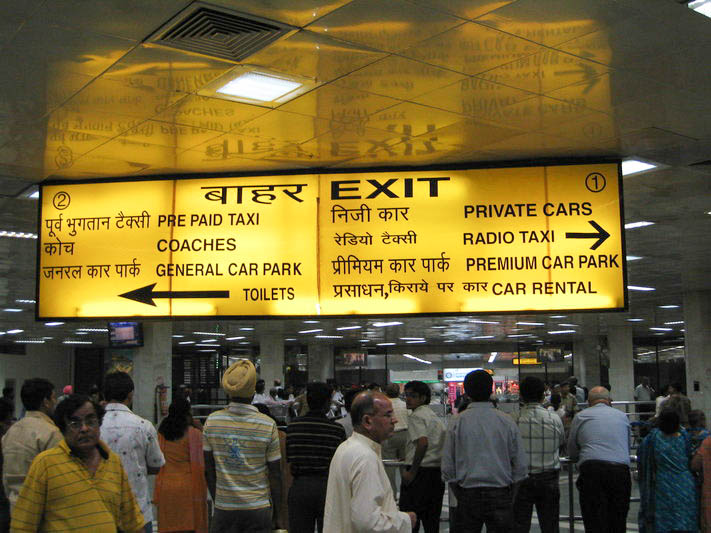
Photo Friday: New Delhi Airport!
When I lived in Dubai as a child, we’d visit India once a year and dreaded coming through the airport. When we got off the plane this time, I was mentally prepared to fight my way through huge crowds, of people with cardboard signs up, and chaos all over the place. I was relieved to see everything inside was rather calm. There weren’t any aggressive taxi drivers forcing us to haggle with their already high prices, or elbows being thrown in our faces just to get to baggage claim. There was even a sign for a pre-paid taxi stand.
India Travelogue: Batta Trouble in the Alleys of New Delhi’s Patel Nagar
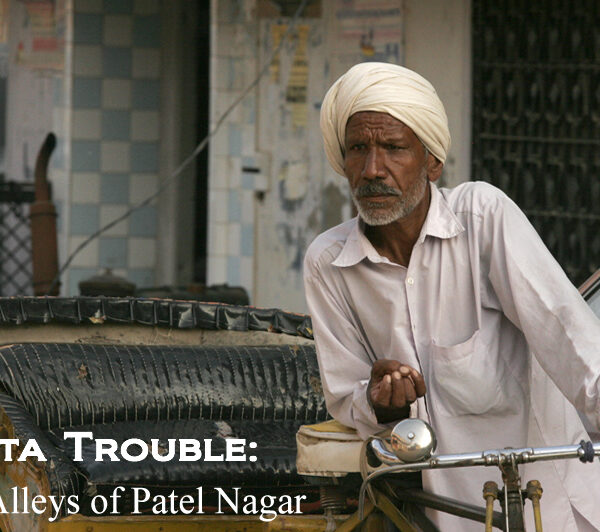
After sleeping most of the day away, we decided to explore West Patel Nagar a bit. We made a pit stop at an internet cafe via cycle rickshaw. This turned out to be not such a great idea because landmarks whizzed by us. The only thing I remembered was a bar. Sona remembered Sharma Sweets. The internet connection wasn’t the greatest, but it was fast enough for us to check email. We wanted to go for a quick exploration around the area so we wrapped up our email-checking and randomly decided which direction to go in.
We walked by some very tempting food and juice stalls, but we didn’t wind up getting anything. The first couple stalls we went to selling juice had pomegranate juice which I am always down for, but only had mango shake (not juice as Sona would have liked). And then it started getting dark. Our stroll until that point had been for perhaps an hour or so. My big plan was to enjoy my anar juice on the walk back to Munna Mamaji’s flat and let Sona frown at the juice-wala for not having mango juice. This did not happen. My alternative plans of eating ice cream, having an ice-cold Limca and eating gol guppe also did not happen.
India Travelogue: The Four Hour Layover Fiesta!
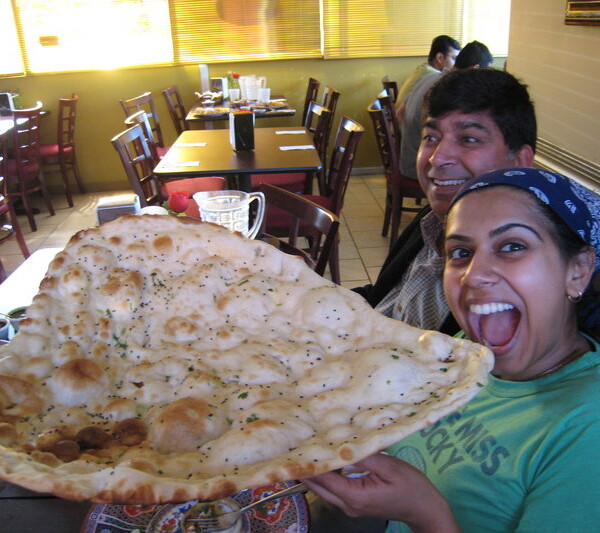
At 4 a.m. my sister made us a snack of samosas and tea to go while my bleary-eyed brother-in-law drove us to the airport to catch our Continental flight to India via . . . Newark, New Jersey, where we had a four hour layover, during which mayhem ensued, as the photo above indicates! Continental is one of the few airlines that still feeds you both on domestic and international flights, but we sure are glad we had those samosas and cha in the morning. Airline food has never been known for its culinary genius, or for being all that edible, and Continental is no exception. But the fact that they still feed you and don’t charge extra for bags is nice.
The night before, alongwith some single malt whiskey, my brother-in-law offered me two great tips for traveling with Sona in India:
1) Go straight to Amritsar and buy a kirpan (dagger). When using it in a tight space like a bus or a train compartment, make small and incisive swings to inflict the most damage while protecting Sona.
2) Buy a really thick karra (steel bracelet) also from Amritsar. This can be used like brass knuckles to beat someone with before using the kirpan.
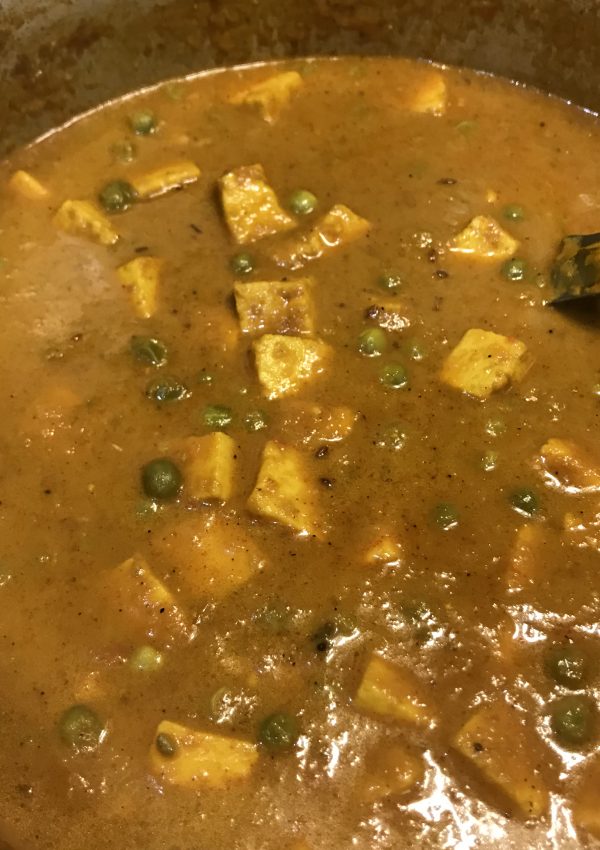
As soon as we stepped off the plane, we were whisked away to India Palace Express for the best layover food ever. On the short car ride to Edison a..k.a. Little India, Sona’s mum got busy making calls to the chef, Rahim, a friend of theirs (his kids grew up with Sona), and ordered a variety of dishes–from the masssive family naan, which Sona ate all by herself (picture above explains it all), lamb chops, tandoori fish, malai chicken, mutter paneer, and of course, daal. The second we stepped into the restaurant, everything was ready to eat! After washing everything down with a refreshing glass of mango lassi and some mithaa paan, we headed to Sona’s parents’ house.
India Travelogue: The 17-Hour Plane Drain
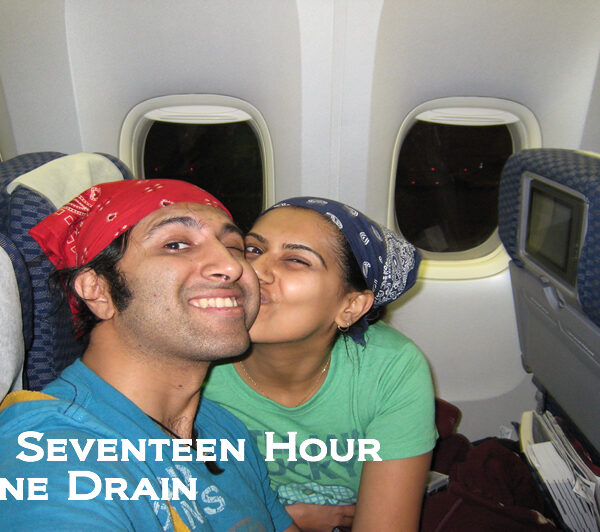
We woke up at three a.m. and were out of the house by four, stuffing samosas and sipping cha as we headed to the airport. By seven a.m., seated in the back near the toilets, we were both revved up for our trip, watching intently as the plane took to the skies. By 7:30, we were both fast asleep. Navdeep doesn’t even remember waking up to consume half of his scrambled egg pita pocket thingie.